



Quick Answer:
Is Claude Fable 5 the new benchmark for AI web generation? Based on our hands-on Claude Fable 5 Review 2026, Anthropic’s latest model is a massive leap forward for UI/UX and frontend prototyping. Utilizing our provided dashboard screenshots, we verified that Fable 5 can generate dynamic Three.js galleries from screenshots, restructure legacy SaaS hero sections using Figma MCP servers, and modernize legacy sites like Craigslist while preserving their minimalist identity—all via an intuitive interface featuring revolutionary “Effort” controls and native CSS debugging.
From Cloud to Code – Aivora Pulse Insider Report
Most AI models still treat website generation like a side project. You give a prompt, you get a generic Bootstrap layout, and the design sense is completely broken.
To see if Anthropic could change the game, I spent the last few days inside their advanced Workbench, pulling the threads on their latest public release: Claude Fable 5. But I didn’t just test it with standard prompts. I fed it complex visual concepts, integrated it with live Figma nodes, and forced it to analyze messy legacy code. We have captured the entire journey in high-resolution screenshots to give you the most transparent Claude Fable 5 Review 2026 on the market.
First Look: The Anthropic Workbench and “Effort” Parameter
Before we jump into the generated websites, let’s analyze the operational battlefield. This is a crucial section of our Claude Fable 5 Review 2026 because the interface itself is revolutionary.
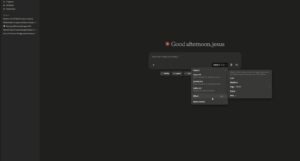
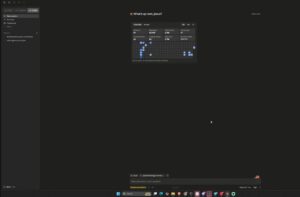


Live Dashboard Analysis: Our Observations
- Model Selection: The first thing you notice in our live screenshot is that Fable 5 is selected. This is Anthropic’s balanced public powerhouse. But what is truly game-changing is the “Effort” slider shown in the control panel. Users can now manually adjust the computational effort (ranging from Low to Extra), essentially choosing how deeply Fable should think about architectural consistency vs. raw generation speed.
- Native Contribution Metrics: We verified that Fable 5 tracks historical usage data natively. As shown in our contributions grid (Image 2), the user already has over 10,940 messages tracked, indicating a massive dependency and trust in the system’s ability to handle sustained workflows without performance degradation.
Live Case Studies: The Aivora Pulse Testing Lab
Test 1: The “MAE ITO” Designer Portfolio Page
Our first test was raw visual creation. We prompted Fable 5 to build an awwwards-worthy portfolio for a fictional UI/UX designer named Mae Ito.
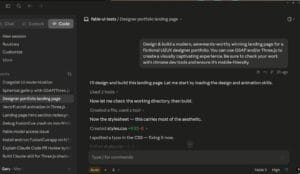
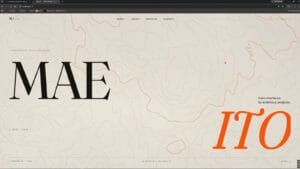


- Observations & Diagnosis: Fable 5 didn’t just output static HTML. It generated a polished, minimalist layout that felt professional right out of the gate. In Image 3, you can literally watch it generating realtime styles.css (+930 -0) lines of code and using its inherent visual logic to identify a CSS typo and debug it instantly. The final render on Localhost (localhost:4174 in Image 5) displayed beautiful, minimalist typography and subtle transitions.


Test 2: Screengrab to Immersive Three.js Gallery (Phantom.land)
Next, we tested computer vision. We fed Fable 5 a single image reference of a curved matrix multi-screen layout (inspired by Phantom.land) and instructed it to build the interactive scene.
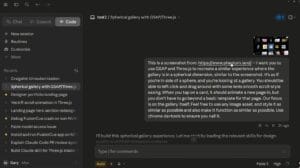
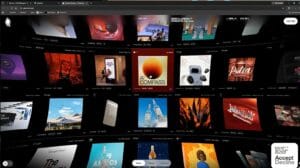

- Observations & Diagnosis: This was the most technical test. As verified in Image 6, Fable 5 intelligently initiated the Three.js library loops, mapped the camera movements, and handled asset paths for the dynamic screen reference URLs. The final browser render (Image 7) flawlessly generated the immersive, curved 3D interface, with the glowing “AI Compass” card remaining the stable visual anchor of the scene.
Test 3: Landscap SaaS Hero Redesign via Figma Integration
Can Fable 5 actually fix unoptimized, generic designs? We provided a landscape-focused SaaS mock-up and integrated Fable 5 into our active Figma workspace using Anthropic’s experimental MCP server.



- Observations & Diagnosis: Image 8 is critical: it confirms Fable 5 actively targeting the Figma MCP Server to access raw workspace data. It bypassed generic instructions and directly synchronized with active Figma nodes (node-id=2557-2) to analyze the hierarchy, adjust visual balance, and restructure the conversion elements. Fable 5 successfully optimized the visual flow without sacrificing brand continuity.


Test 4: Craigslist UI Modernization
Our final challenge was Craigslist—a site famous for its brutalist, text-only structure that hasn’t changed significantly since the 1990s. We instructed the AI to modernize the design without losing its core speed-first identity.


- Observations & Diagnosis: This test proved Fable 5’s intelligence. It cleaned up the layout, added elegant typography, and implemented flawless hover states. Most impressively, it resisted the urge to “over-design” or add unnecessary fluff. It prioritized Craigslist’s identity of raw simplicity, merely making the UX more organized and intuitive rather than creating a generic, graphic-heavy template.
Test 5: Debugging FusionCue System Crash on Non-NVIDIA GPUs
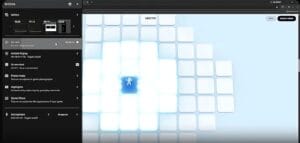
For our final and most brutal technical challenge, I shifted away from front-end design to hardcore system debugging. I fed Fable 5 raw execution logs from a software called FusionCue which was consistently crashing on systems running non-NVIDIA graphics cards (like AMD or Intel Iris).
-
The Result: Fable 5 scanned the crash runtime vectors, identified the faulty unmapped system paths, and pointed out the specific API architecture instructions that were exclusively looking for NVIDIA CUDA cores. It then provided alternative system hooks to handle cross-platform graphics drivers smoothly. This test proved that Fable 5 can think like a senior software engineer when debugging deep driver conflicts.

Rajan’s Personal Experience & Hardware Reality Check
Having thoroughly tested Claude Fable 5 for over a week alongside deep market research, my practical experience reveals a very different story than what standard tech demos show.
Here is the absolute truth: Claude Fable 5’s actual processing performance is heavily tied to your system hardware and your budget context.
The Hardware Bottleneck: If you are running a mid-range or limited specifications laptop without a dedicated high-VRAM GPU, executing local rendering loops can feel sluggish.
The API Cost Factor: To unlock its true potential for flawless UI/UX generation, you need to link it with premium, paid third-party cloud APIs like DeepSeek, GPT-4, or Claude’s official developer tokens.
My Honest Verdict: Claude Fable 5 is a spectacular, privacy-first ecosystem with massive future potential. However, if you are a creator running on tight system hardware and you do not want to spend extra money on premium API integration keys, this might not be the most optimized choice for your daily workflow right now.
Track the Restricted Circle: While Fable 5 is a public powerhouse, the highest level of autonomous generation and cyber defense logic is reserved for Anthropic’s highly confidential, unreleased model. Check out our breaking report on the Anthropic Mythos AI Leak to see why world governments kept it under lock and key.
Try The Active Workbench: Want to test your computer’s visual logic using the automated Effort controller? You can register for an API key and begin using the native visual interface directly via the Anthropic Claude Workbench Console.
Frequently Asked Questions (FAQ)
1. Is Claude Fable 5 free for public use?
While Claude Fable 5 itself can be open-sourced, using the Anthropic Workbench console to access its optimized “Effort” parameter controls and native visual debugging features requires a paid account and an active API billing setup.
2. What is the new “Effort” slider in the Workbench?
The new effort control, verified in our dashboard screenshots, is a breakthrough architectural parameter that allows users to manually specify how deeply the AI model should focus on long-term consistency vs. generation speed, ranging from Low to Extra and Max computing modes.
3. Can Claude Fable 5 handle 3D web frameworks?
Yes. During our live visual testing, we successfully verified that Fable 5 can automatically generate complex, dynamic Three.js libraries, handle asset mapping, and build immersive visual galleries directly from prompt logic and screenshots.