Open-Source AI Tools are fundamentally reshaping how developers and enterprise engineering teams build software in 2026. The days of relying exclusively on closed-source, highly expensive cloud APIs are officially over. As data privacy regulations tighten and enterprise API costs skyrocket, B2B agencies are aggressively migrating their digital infrastructure toward local, community-driven AI models that offer complete data sovereignty and zero-latency execution.
For modern software engineers, DevOps teams, and tech founders, navigating the massive ecosystem of GitHub repositories can be overwhelming. To help you build a robust, cost-effective tech stack, we have evaluated and ranked the definitive ecosystem. In this deep-dive technical guide, we will break down the top 10 Open-Source AI Tools that are absolutely essential for developers operating in the 2026 landscape.
1. The Migration to Localized Tech Stacks
If you recently read our workflow guide on the Best AI Productivity Tools for B2B Teams, you understand that operational speed is everything. However, when building proprietary software for clients, feeding sensitive B2B data into third-party cloud servers poses a massive security risk.
By utilizing local models and transparent frameworks, developers can build powerful autonomous agents, intelligent search pipelines, and automated coding assistants that run entirely on their own secure hardware. Let’s dive into the core tools required to make this a reality.
2. Local LLM Runners and Inference Engines
The foundation of any local AI stack is the engine used to run large language models (LLMs) on consumer or enterprise hardware. These Open-Source AI Tools optimize GPU/CPU memory to run massive models efficiently.
-
1. Ollama: Ollama has become the absolute industry standard for running local LLMs. It packages models, weights, configuration, and data into a single, easy-to-manage Modelfile. Whether you are running Meta’s Llama 3 or Google’s Gemma, Ollama allows developers to spin up a local API endpoint with a single terminal command. Its frictionless integration with macOS, Windows, and Linux makes it the cornerstone of local AI development.
-
2. Llama.cpp: When hardware resources are constrained, Llama.cpp is the ultimate savior. Written in pure C/C++, this inference engine is designed to achieve maximum performance on everyday hardware (even running efficiently on MacBooks without dedicated NVIDIA GPUs). It is the driving force behind quantized models, allowing developers to compress massive 70B parameter models down to manageable sizes without losing significant reasoning capabilities.
-
3. vLLM: For B2B agencies ready to deploy models into production, vLLM is the definitive high-throughput serving engine. It utilizes PagedAttention algorithms to manage memory efficiently, dramatically increasing the number of concurrent requests a single server can handle. If you are building a SaaS application that serves AI responses to hundreds of users simultaneously, vLLM is a mandatory infrastructure component.
3. Multi-Agent and Orchestration Frameworks
Developers are no longer building simple chatbots; they are building autonomous teams. These frameworks allow you to connect logic, tools, and multiple AI personas together.
-
4. LangChain: LangChain remains the undisputed heavyweight champion of AI orchestration. It provides the essential modular components needed to connect LLMs to external data sources (like SQL databases, APIs, or PDF documents). For developers building Retrieval-Augmented Generation (RAG) pipelines, LangChain provides the pre-built memory buffers and document loaders necessary to turn a generic model into a highly specific corporate brain.
-
5. CrewAI: While other frameworks can be complex, CrewAI focuses heavily on role-playing autonomous agents. Developers can easily define a “Researcher Agent,” a “Writer Agent,” and a “QA Agent,” hand them a collective goal, and watch them collaborate to complete a complex software project. It is incredibly robust for agencies looking to automate their internal research and development workflows.
-
6. AutoGen (by Microsoft): AutoGen is a highly technical, multi-agent conversation framework. It allows developers to build systems where AI models can converse with each other, write code, execute that code in a secure Docker container, debug any resulting errors, and iterate until the application works perfectly. It represents the pinnacle of agentic software engineering.
4. AI Coding Assistants and IDE Integrations
Why pay monthly subscriptions for AI pair programmers when you can integrate powerful open-source alternatives directly into VS Code or JetBrains?
-
7. Continue.dev: Continue is the leading open-source alternative to GitHub Copilot. It operates as an extension within your IDE, allowing you to connect any local model (via Ollama) or any API key. Developers can highlight code blocks, ask the AI to refactor logic, or automatically generate unit tests. Because it can be routed through local models, it guarantees that your proprietary enterprise code is never leaked to public training servers.
-
8. Aider: Aider is a command-line AI coding assistant that natively understands your entire Git repository. Instead of copy-pasting code snippets, you simply run Aider in your terminal, ask it to add a new feature, and the AI will analyze your codebase, write the code, and automatically commit the changes to Git with a generated commit message. It is a massive time-saver for senior engineers.
-
9. Khoj: Khoj operates as an AI-powered second brain for developers. It indexes your entire local workspace—including markdown notes, PDF documentation, GitHub issues, and raw code—and allows you to chat with your local files. It is the perfect tool for instantly navigating massive, undocumented legacy codebases.
5. Low-Code Building and Deployment
For teams that need to prototype and deploy AI applications rapidly, visual builders are crucial Open-Source AI Tools.
-
10. Flowise: Flowise is a phenomenal drag-and-drop UI tool designed specifically for building customized LLM workflows. Instead of writing hundreds of lines of Python to configure a LangChain RAG pipeline, developers can visually connect document loaders, text splitters, vector databases, and LLM nodes on a digital canvas. It allows B2B agencies to rapidly prototype AI solutions for clients in hours rather than weeks.
Conclusion
The shift toward localized, transparent development environments is the defining trend of 2026. By integrating these top 10 Open-Source AI Tools into your daily workflows—from Ollama’s seamless inference to CrewAI’s agentic orchestration—developers can build faster, cheaper, and infinitely more secure enterprise software.
To ensure you are utilizing these frameworks to their maximum potential, we highly recommend diving into the official documentation and community models available on the Hugging Face Developer Hub, the ultimate repository for open-weight intelligence. Adapting to this open-source ecosystem is no longer optional; it is the baseline requirement for modern software engineering.
Frequently Asked Questions (FAQs)
Q1. Are Open-Source AI Tools completely free to use for commercial projects? Answer: The vast majority of these tools are released under permissive licenses like MIT or Apache 2.0, meaning they are completely free for commercial use. However, you must always verify the specific license of the underlying LLM weights (e.g., Llama 3) you choose to run within these tools.
Q2. Do I need an expensive GPU to run local AI models? Answer: Not anymore. Thanks to inference engines like Llama.cpp and advanced model quantization techniques, developers can run highly capable 8B to 12B parameter models on standard consumer hardware, including M-series Macs and standard Windows laptops.
Q3. How does Continue.dev compare to paid tools like GitHub Copilot? Answer: Continue.dev provides comparable autocomplete and chat functionalities, but with a massive advantage: flexibility. You are not locked into one provider. You can route Continue to use a free local model via Ollama for privacy, or connect it to Claude Fable 5 API for complex logic, giving the developer ultimate control.
Q4. What is the best open-source framework for building RAG applications? Answer: LangChain is the industry standard for code-heavy implementations due to its massive ecosystem of integrations. However, if you want to build a RAG application visually and rapidly, Flowise provides an unmatched drag-and-drop interface built on top of LangChain’s architecture.
Related Posts
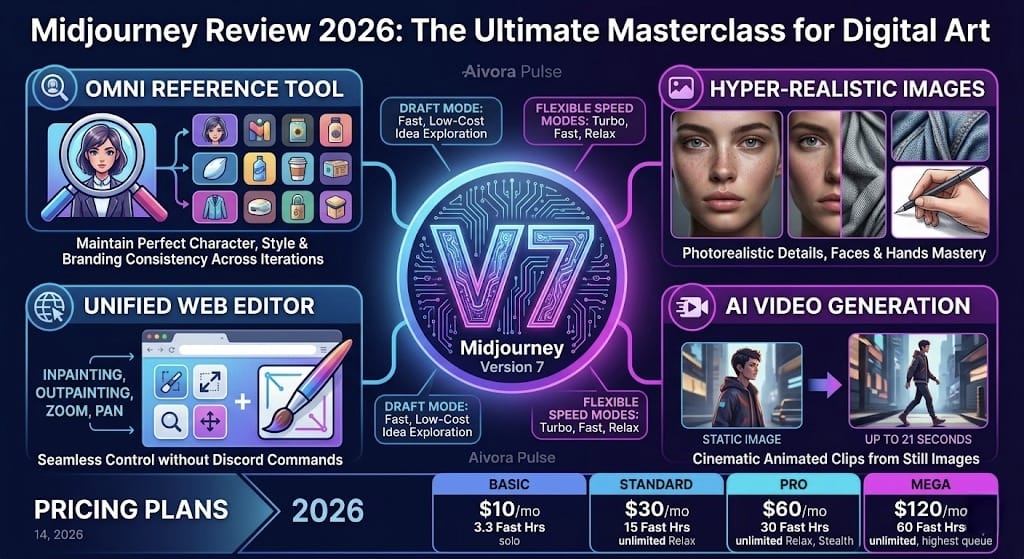
Midjourney Review 2026: The Ultimate Tool for Brilliant Art
Midjourney Review 2026 is the most comprehensive guide for creators…
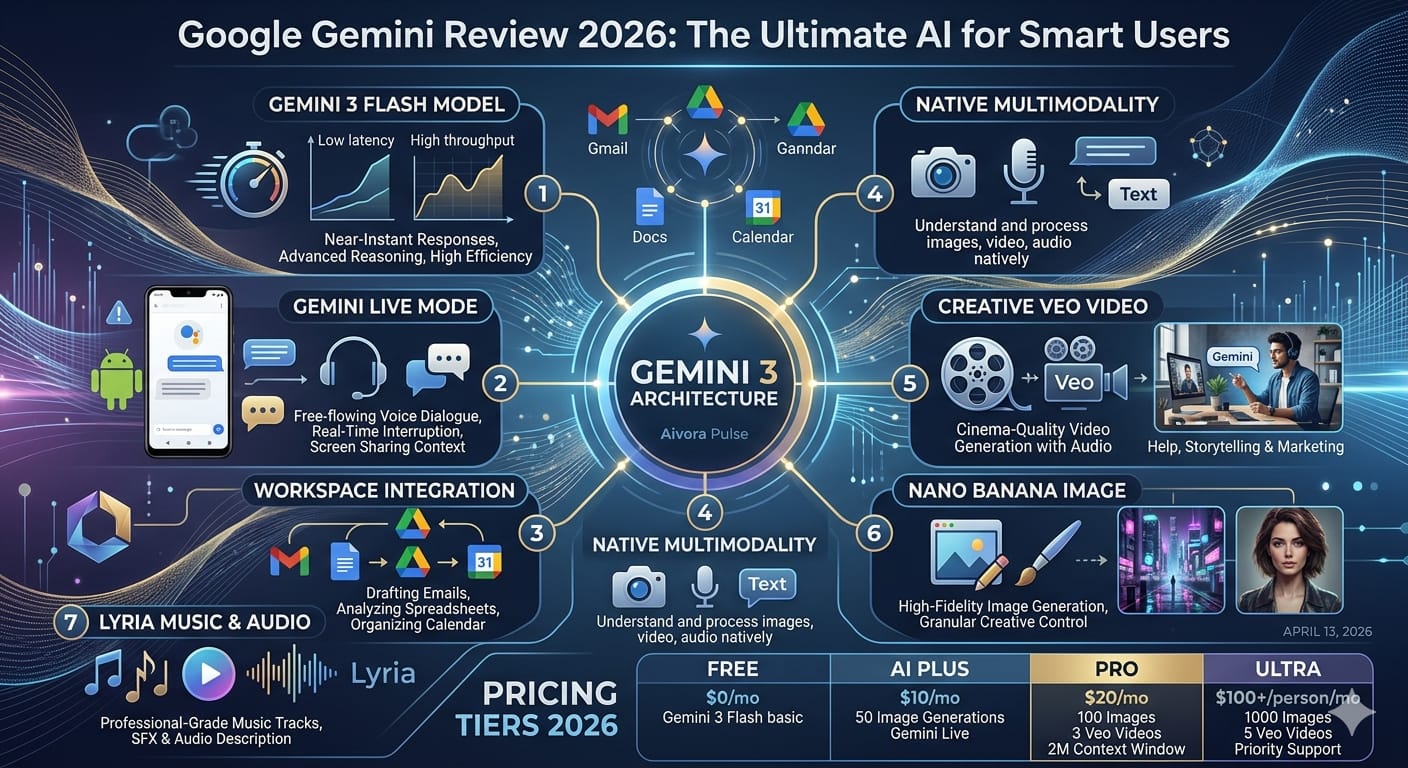
Google Gemini Review 2026: The Most Brilliant AI Evolution Ever
Google Gemini Review 2026 is the only guide you need…
Kimi K3 Enterprise Use Cases: Best & Ultimate Guide
Exploring the top Kimi K3 enterprise use cases is currently…