How to Start an AI Automation Agency?
To start an AI Automation Agency in 2026, you must pivot from selling generic software to solving specific operational bottlenecks for high-ticket local businesses. First, select a niche that loses money on inefficiencies (e.g., medical clinics missing phone calls, real estate firms dropping leads). Second, build an autonomous solution using no-code platforms like Zapier for workflow automation or Flowise for custom AI voice agents. Finally, pitch these businesses by offering a free, custom-built prototype that demonstrates immediate cost savings, shifting the conversation from “buying AI” to “increasing revenue.”
As the technological landscape rapidly shifts in 2026, traditional digital marketing agencies are facing unprecedented churn rates. Business owners no longer want to pay monthly retainers for basic SEO audits or generic social media posts. Instead, enterprise clients and local B2B businesses are desperately seeking operational efficiency. They want systems that reduce overhead, automate customer support, and instantly qualify sales leads.
This massive market gap has given rise to the most lucrative business model of the decade. In this comprehensive, data-driven guide, we will break down exactly how to build and scale your agency from the ground up, covering the ideal client niches, the ultimate tech stack, and the foolproof strategy to close high-ticket contracts.
1. Identifying the Perfect High-Ticket B2B Niche
The most common reason a new AI Automation Agency fails is going too broad. If you attempt to sell “AI solutions” to every business in your city, your messaging will be entirely diluted. The secret to commanding high retainers (typically $2,000 to $5,000 per month) is hyper-specialization. You must target industries with high customer lifetime value (LTV) where a single missed lead costs them thousands of dollars.
-
Real Estate Agencies: Realtors lose massive amounts of commission when they fail to follow up with digital leads within five minutes. Building an automated SMS and AI voice qualification agent that instantly contacts Zillow or Facebook leads can double a realtor’s closing rate.
-
Medical & Dental Clinics: Private healthcare clinics often struggle with overloaded front-desk staff. A custom conversational agent that integrates with their calendar to book, reschedule, and cancel appointments autonomously saves them from hiring additional administrative staff.
-
Home Service Contractors (Plumbers, Roofers): When a homeowner has a burst pipe, they call the first three plumbers on Google and hire the first one who answers. An AI voice assistant that answers calls 24/7, asks qualifying triage questions, and instantly dispatches a quote guarantees the contractor never loses an emergency job to a competitor.
2. Building the Autonomous Tech Stack
You do not need to be a senior machine learning engineer to build a massively successful AI Automation Agency. The 2026 ecosystem is driven by intuitive, no-code, and low-code visual builders that allow you to construct complex agentic workflows in hours.
-
Zapier & Make (The Connective Tissue): These platforms are the backbone of any automation agency. They allow you to seamlessly connect thousands of different software applications without writing a single line of API code. For example, you can build a workflow that triggers when a client receives a new email, uses OpenAI to draft a custom response, and pushes the summary to a Slack channel.
-
Flowise (Visual AI Builder): Flowise is a revolutionary drag-and-drop UI designed for building customized Large Language Model (LLM) workflows. Instead of manually coding a LangChain architecture, you can visually connect document loaders (like a clinic’s FAQ PDF) to a conversational agent, instantly creating a highly trained customer support bot.
-
Local and Open-Source Models: For enterprise clients with strict data privacy requirements (like healthcare or legal firms), relying on public cloud APIs can be a compliance nightmare. To serve these specialized clients, many top agencies utilize local models. We highly recommend reviewing our comprehensive breakdown of the Top 10 Open-Source AI Tools for Developers to understand how to deploy secure, localized AI solutions for your high-end B2B clients.
3. Core Services to Offer Your Clients
When packaging your services, avoid confusing technical jargon. Your pricing should reflect the business outcome, not the software stack. Focus on these three core deliverables:
-
AI Voice Agents (24/7 Reception): Deploying natural-sounding AI models that can speak multiple languages (including regional dialects) to handle inbound calls, qualify the caller’s intent, and book calendar appointments directly.
-
Lead Nurturing Automations: Systems that instantly react to a new lead via webhooks, research the lead’s company size on LinkedIn, and draft a hyper-personalized cold outreach email stored in the client’s CRM for review.
-
Internal Knowledge Bases: Creating a secure, chat-based interface trained exclusively on a company’s internal Standard Operating Procedures (SOPs). This allows new employees to ask complex operational questions and get instant, accurate answers without interrupting senior management.
4. How to Pitch and Close B2B Clients
The traditional agency model of cold-emailing a massive pitch deck no longer works. Local business owners are inherently skeptical of “AI hype.” To close contracts, you must use the “Value First Prototype” strategy.
Instead of asking a real estate broker for a meeting to “discuss AI,” spend 30 minutes building a working prototype of an SMS lead-qualification bot tailored to their specific agency. Send them a short video demonstrating exactly how the bot handles a fake client, or better yet, give them a phone number to call and interact with the AI voice agent themselves.
When a business owner physically interacts with the automation and sees their own company name being used, the sale becomes frictionless. You transition from selling an abstract concept to selling a tangible asset. For a deeper understanding of enterprise closing techniques and managing client relationships, we highly advise studying the official HubSpot B2B Sales Strategies guide to refine your agency’s closing architecture.
Conclusion
Launching an AI Automation Agency in 2026 is the ultimate opportunity to bridge the gap between complex artificial intelligence and traditional business operations. By identifying a high-ticket niche, mastering no-code orchestration tools like Zapier and Flowise, and pitching customized prototypes rather than generic promises, you can rapidly scale a highly profitable, low-overhead digital enterprise. Stop selling marketing retainers; start selling operational leverage.
Frequently Asked Questions (FAQs)
Q1. Do I need to know how to code to start an AI Automation Agency? Answer: No. The vast majority of workflow automations and customer service agents can be built using powerful no-code visual builders like Zapier, Make, and Flowise. However, understanding basic API logic and JSON structures will give you a significant competitive advantage.
Q2. How do you price AI automation services for local businesses? Answer: The standard model involves a one-time setup fee (ranging from $1,500 to $5,000 depending on complexity) for building the system, followed by a monthly maintenance and API cost retainer (typically $500 to $1,500) to ensure the system runs smoothly and adapts to updates.
Q3. Are AI voice agents actually good enough for customer support? Answer: Yes. As of 2026, voice models have crossed the “uncanny valley.” They feature ultra-low latency, can detect human interruption, express natural vocal inflections, and converse flawlessly in multiple languages, making them highly effective for front-desk triage.
Q4. What is the fastest way to get the first client for a new agency? Answer: The fastest method is the “Prototype Pitch.” Identify a local business, build a small, functional AI chatbot trained on their website’s FAQ, and send the owner a video of it working. Showing the actual solution is infinitely more powerful than sending a generic cold email.
Related Posts

AI-powered product engineering: 3 Best Epic Tools
Quick Answer The tech landscape is shifting rapidly, and if…
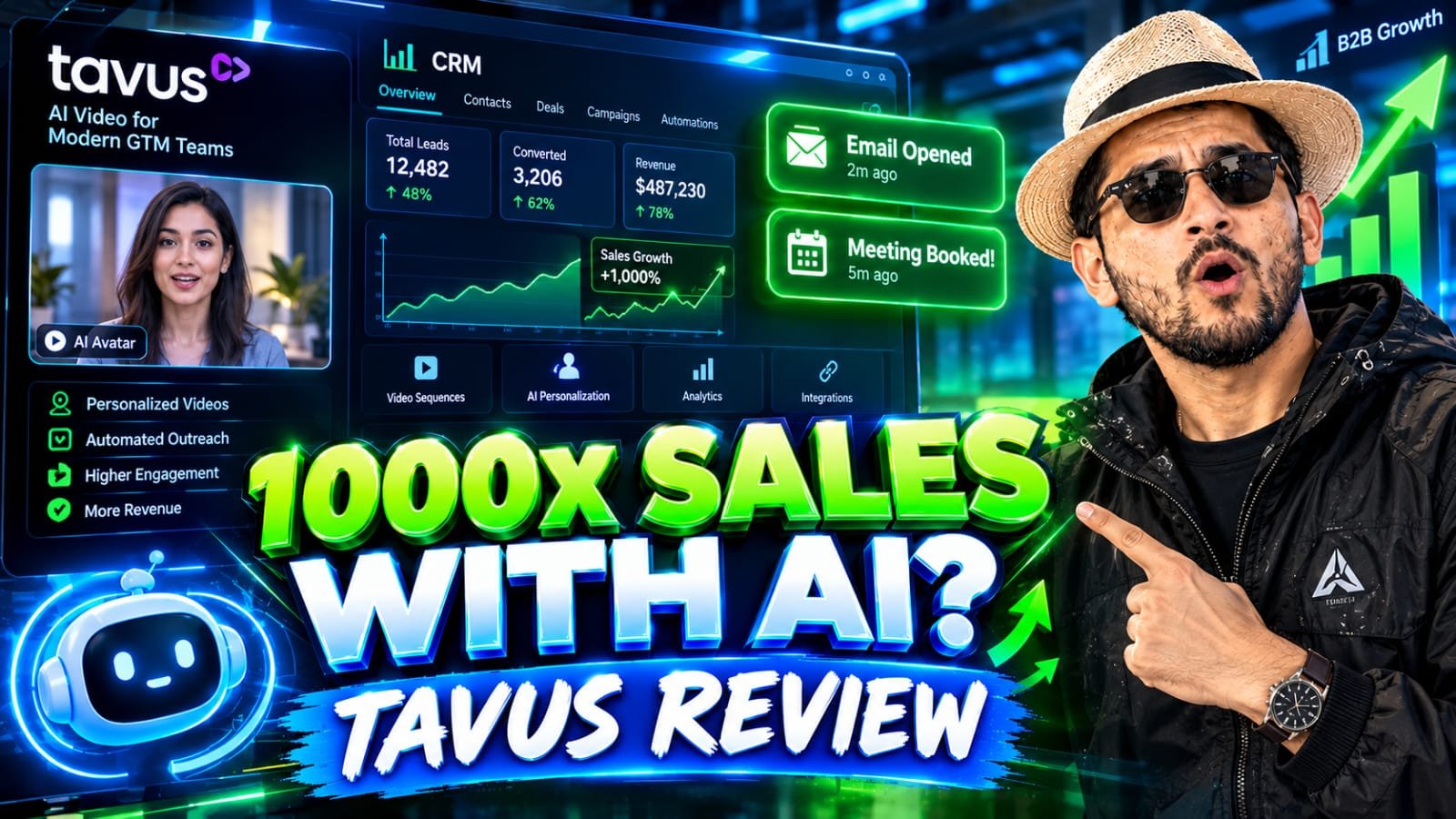
Tavus AI API Review (2026): Best for B2B Sales?
Sales outreach has hit a saturation wall. Buyers can spot…
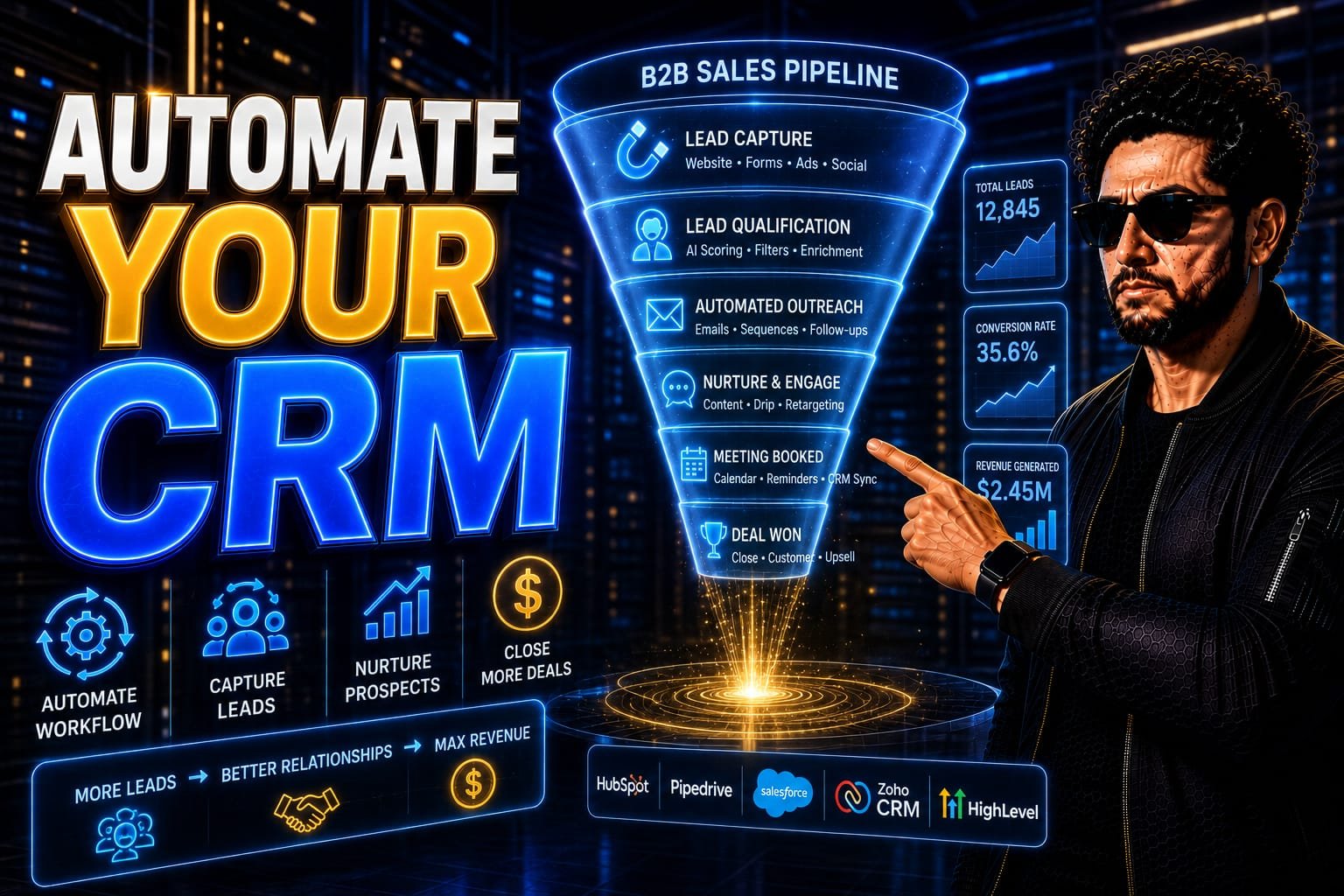
Ultimate AI CRM Automation 2026: Proven B2B Guide
What is AI CRM Automation? AI CRM Automation is the…