Quick Answer:
What makes Anthropic’s Claude Fable 5 the best AI tool of 2026? Unlike standard LLMs that require highly granular prompting, Claude Fable 5 operates as an autonomous, self-healing execution loop. Developed as a balanced public descendant of the highly restricted Claude Mythos (Project Glasswing) framework, Fable 5 natively maps complex visual layouts, uncovers deep system dependencies, and generates complex code frameworks from single-line text inputs or screen recordings. It shifts AI from basic text assistance to direct, full-scale project implementation.
Beyond the Benchmarks to Real Infrastructure
Every tech creator online is flashing the same marketing charts, telling you what Anthropic’s newest model can do on paper. But models can claim anything on paper. To understand its true power, you have to stop looking at static graphs and start looking at direct production implementation.
When OpenAI claimed dominance with its GPT-5.5 launch—backed by massive influencer hype from creators like Matt Wolfe—the tech community assumed Anthropic’s secret weapon, the elite Claude Mythos model, had lost its edge. Mythos was famously locked down under Project Glasswing because its extreme cybersecurity prowess made it a dual-use hazard, capable of identifying and patching enterprise bugs or instantly mapping out network vulnerabilities.
But with the recent release of Claude Fable 5, Anthropic has handed a specialized safety-gated variant of that core cognitive brain to the public. Featuring a massive 1-Million token context window and priced at $50.00 per million output tokens (exactly double the cost of Claude Opus 4.8), Fable 5 is built for complex execution layers rather than random daily text generation.
Deep-Tech Insight: The Architecture of the Fable 5 Safety Gate
A key architectural innovation in Fable 5 is its automated safety model-switching matrix. If a user attempts to force the model into executing live cyber exploits, high-risk malware reverse-engineering, or direct network penetration tests, Fable 5 triggers an internal governance hook. Instead of a hard refusal, it shifts background computational tracking to the lower-parameter Claude Opus layer for standard enterprise security verification. This allows verified cybersecurity corporations access to the full Mythos capability tier, while providing general developers with an incredibly potent, ethics-aligned development workspace.
Global Use Cases: Disrupting Science, Medicine, and Finance
Before we look at local testing parameters, the enterprise scale of Fable 5’s execution power is already transforming global research infrastructures:
-
Medical Breakthroughs (The Universal Vaccine): In specialized medical testing runs, the core architecture evaluated 20 complex biological research papers, successfully establishing accurate findings for 17 of them. Academic institutions like Oxford utilized these precise analytical vectors to compress multi-year timelines, mapping out data points to assist in developing a foundational universal vaccine framework targeting evolving coronaviruses and seasonal viral strains.
-
Enterprise Asset Auditing: Multi-national giants like Staples have used the underlying engine to process years of unstructured corporate financial data in mere hours. Fable 5 can ingest massive multi-page bank statements or legal PDF audits, scan millions of raw entries, identify anomalies, and structure a certified executive audit report in under 10 minutes—matching the exact compliance formatting of elite institutional firms.
-
Web-App Compilation Ecosystems: Code generation suites like Lorable and leading deployment engines have fully embedded Fable 5 into their backend setups. This integration allows users to spin up extensive cloud hosting pipelines and full-stack software repos within an accessible subscription layer, eliminating local compute overhead.
Inside the Sandbox: My Personal Coding Verdict
To bypass generic industry claims, we deployed Claude Fable 5 inside our own sandbox environment for a series of zero-detail, rapid-prototyping implementation tests. The results were staggering.
Test 1: Replicating an Award-Winning Animation Framework (Ponda UI)
We visited awards.com and selected Ponda, an exceptionally complex, highly animated web layout recognized globally for its smooth visual transitions and custom frontend rendering.
Instead of writing a complex 500-line requirement spec or providing raw design assets, we captured a simple, unedited screen recording of the Ponda website in motion. We uploaded the video to Claude Fable 5 with a basic prompt:

“This site is highly animated. Find the technology and build a website identical to this.”
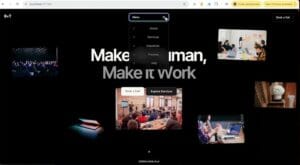
[Raw Visual Screen Recording Input] -> [Claude Fable 5 Vision & Reasoning]
                                                    |
                                                    v
[Auto-Identified Stack: GreenSock (GSAP) + ScrollTrigger + Custom Frameworks]
                                                    |
                                                    v
                    [75% to 80% Accurate Live Localhost Replicated UI]
-
The Execution: Fable 5 did not require pre-extracted assets. It reverse-engineered the layout, independently scanned the motion vectors, and correctly identified that it needed GreenSock (GSAP) and ScrollTrigger JavaScript libraries. Within 15 to 20 minutes, it delivered a functional codebase with identical menu interactions, smooth visual logic, and custom image choices. It even injected extra complementary animations natively.
-
The Comparison: We fed the exact same video file to OpenAI’s Codex (GPT-5.5 infrastructure). While Codex maintained proper text identifiers like “Beyond Icons,” and kept original image links intact, it failed to replicate the core architectural framework. It placed images erratically and substituted its own arbitrary layout paths rather than accurately copying the award-winning design flow. Fable 5 proved it possesses a superior visual-to-code understanding.
Test 2: Building a Functional Minecraft Skyblock Game in One Sentence
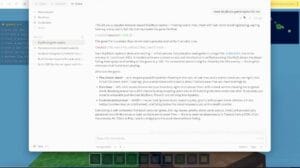
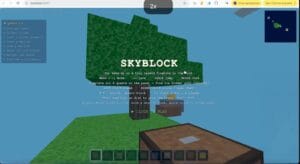
Next, we tested long-horizon logical generation without giving the model any structural requirements or mechanical assets. We typed a simple, four-word prompt: “Make Skyblock game replica for me.”
-
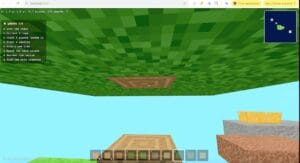
The Execution: Standard LLMs typically fail this test, yielding incomplete code snippets or an unplayable script. Fable 5 operated within an autonomous self-correcting loop. It drafted the environment, established the 3D physics constraints, generated the procedural asset rendering blocks, and delivered a complete, fully playable Minecraft Skyblock Game Replica inside its preview window in under 20 minutes. The player avatar jumps, interacts with blocks, and traverses the environment seamlessly with zero broken asset hooks.
Technical Analysis: Why Fable 5 Changes the Code Paradigm
Previous generations of AI code assistants suffered from strict token limits and context fragmentation. If you fed them a massive project file, they would lose track of the codebase architecture, leaving you with incomplete scripts, broken loops, and hours of manual debugging.
Claude Fable 5 executes tasks like a senior software engineer. When given an objective, it doesn’t just output raw text; it sets up an internal re-planning framework:
-
Environmental Assessment: It scans the global state of the file, analyzing cross-file scripts, system imports, and CSS stylesheets.
-
Autonomous Execution & Verification: It drafts a code path, visually inspects the preview window for rendering bugs, monitors compiler logs, and automatically runs code-patching loops if errors occur.
-
Post-Project Optimization Audit: Once the core code blocks are functional, Fable 5 reviews the complete structure one final time to eliminate unmapped dependencies or optimization bottlenecks before serving the final project directory.
Financial Efficiency: Balancing Your Compute Budget
While Fable 5 is undeniably an incredible model, deploying it carelessly can quickly drain your development budget:
-
The Luxury Compute Trap: Running Fable 5 for generic code documentation, simple script syntax, or minor text modifications is highly inefficient. At $50.00 per million output tokens, it can become a significant financial drain.
-
The Cost-Optimization Blueprint: For daily boilerplate coding, standard script logic, and basic debugging, developers should optimize their workflows by leveraging previous-generation models like Claude Opus 4.7 or 4.8 at half the cost ($25.00/M). Reserve Fable 5 strictly for complex logic design, unmapped visual prototyping, and deep system architecture debugging.
Track Multi-Agent Deployments: If you want to see how a frontier cognitive engine performs when integrated directly into a complete multi-agent engineering suite, read our deep dive comparison on Devon 2.0 vs Claude Fable 5 to master your cloud-based parallel workspace.
Verify System Updates: Check out the official benchmarks, model safety whitepapers, and enterprise access terms directly via the official Anthropic Model Index.
Frequently Asked Questions (FAQ)
1. Can Claude Fable 5 build websites from videos? Yes. Through its advanced visual-spatial reasoning matrix, users can upload a clean screen recording of a working web interface, and Fable 5 can identify the underlying framework libraries (such as GSAP or Tailwind) and generate a functional code replication.
2. What is the difference between Claude Mythos and Fable 5? Claude Mythos (Project Glasswing) is Anthropic’s internal, high-security model restricted due to its deep cybersecurity penetration capabilities. Claude Fable 5 is the public, safety-gated descendant optimized for mainstream software engineering, complex analytics, and visual layout design.
3. Is Claude Fable 5 cost-effective for everyday coding tasks? No. At $50.00 per million output tokens, it is double the price of Claude Opus 4.8. It is highly recommended to use standard Opus models for everyday debugging and reserve Fable 5 for complex architectural problems.
Related Posts

Breaking: OpenAI Jalapeño Chip Built in Just 9 Months
The AI hardware landscape has just experienced a massive earthquake.…

Incredible v0 by Vercel Review: Ultimate Front-End Guide
Quick Answer: Is v0 by Vercel worth it for web…

OpenAI custom processors: Top 3 Amazing Hacks
Quick Answer Yes, OpenAI is officially designing its own customized…