Quick Answer
While Google still dominates global traffic, the top AI Search Engines 2026 challenging its monopoly for research and discovery are Perplexity AI (best for cited research), ChatGPT Search (best conversational companion), Microsoft Copilot (best for enterprise workflows), and Brave Search (best for privacy). Google is also heavily adapting with its own “AI Mode.”
Personal Sandbox Opinion
During my continuous sandbox testing of different LLMs, I noticed a massive shift in how we find information online. When I asked Perplexity to compare two complex software tools, it built a complete comparison matrix with inline citations instantly. Traditional Google Search, on the other hand, forced me to open five different ad-heavy websites just to piece the same information together. We are no longer searching for links; we are searching for direct answers.
For over two decades, “Googling” was the only way to navigate the internet. However, an aggressive market shift is underway. E-commerce discovery, complex academic research, and daily productivity tasks are moving away from traditional blue links.
If you want to stay ahead of the traffic drop, you must understand how AI Search Engines 2026 operate and which platforms are leading the charge.
The Top 4 Challengers Taking on Google
1. Perplexity AI: The Ultimate Answer Engine
If you hate scrolling through sponsored ads, Perplexity is the undisputed king of deep research.
-
Core Feature: It doesn’t just generate a summary; it provides strict, numbered inline citations for every single claim, pulling from live web data.
-
Try it out: Explore ad-free research at the official Perplexity Website.
2. ChatGPT Search: The Conversational Giant
OpenAI has transformed its chatbot into a real-time web discovery powerhouse.
-
Core Feature: It blends live web browsing with its massive language models, allowing you to search the web, ask follow-up questions, and generate images all in one single, continuous workflow.
-
Try it out: Experience real-time answers at ChatGPT.
3. Microsoft Copilot: The Enterprise Default
Microsoft has embedded AI search directly into the tools millions of people already use.
-
Core Feature: It combines live Bing data with advanced GPT capabilities, attaching footnote sources directly to its claims, and integrates perfectly with Word, Excel, and Windows.
4. Brave Search: The Privacy-First Alternative
While other platforms rely on massive data scraping, Brave Search uses its own independent index.
-
Core Feature: It offers an AI-powered summary layer that points back to sources without tracking your IP address, making it the top privacy-focused option among AI Search Engines 2026.
Which AI is Actually the Smartest? If you are switching your daily workflow, make sure you are using the right model. Check out our ultimate live test: ChatGPT vs Gemini vs Copilot: Finding the Most Accurate AI to see who wins!
Market Reality: Is Google Actually Dying?
Despite the immense hype surrounding Answer Engine Optimization (AEO), data from mid-2026 shows that Google still controls over 87% of global search referral traffic (and over 97% in India).
The reality is a hybrid future:
-
Google remains undefeated for local maps, live shopping, real-time news, and regional language support.
-
AI Search Engines 2026 are winning the “complex research,” “summarization,” and “multi-source comparison” categories.
Frequently Asked Questions (FAQ)
Q1: Will Perplexity AI completely replace Google Search? Ans: No. While Perplexity is vastly superior for ad-free research and data comparison, Google still dominates local business search, YouTube video discovery, and intent-based shopping.
Q2: Which search engine is best for absolute privacy? Ans: Brave Search and DuckDuckGo remain the best options if you want an AI-assisted search experience that strictly refuses to track your search history or build advertising profiles.
Q3: What is AEO (Answer Engine Optimization)? Ans: AEO is the evolution of SEO. Instead of stuffing keywords to rank on page one of Google, AEO focuses on writing highly structured, factual, and direct content so that AI bots can easily cite your website in their conversational answers.
Related Posts
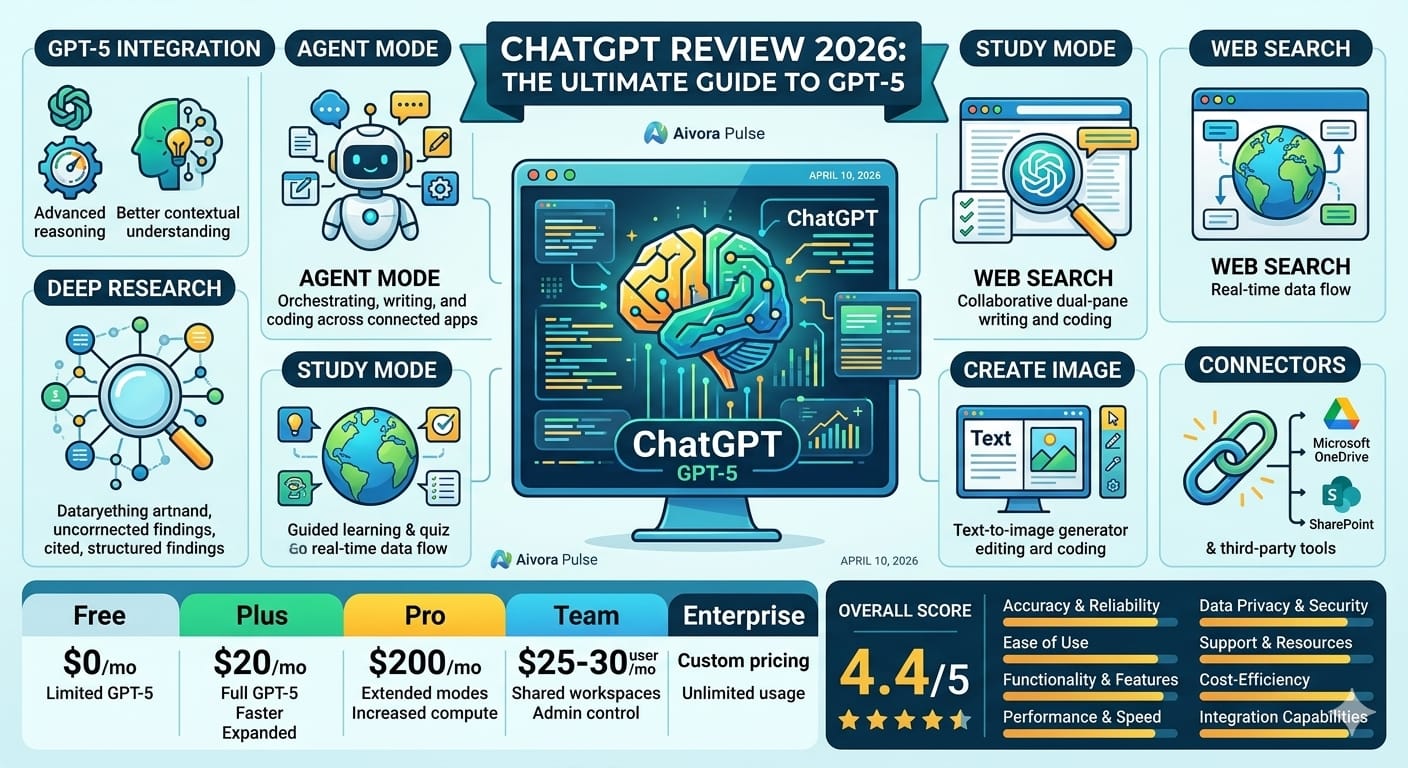
ChatGPT Review 2026: The Best AI for Brilliant Productivity
ChatGPT Review 2026 is the most essential read for anyone…

Top 5 AI Wearables in 2026: The Future of Personalized Health Intelligence
Beyond the Screen – The Era of Wearable AI In…

Top 5 AI Voice and Music Generators in 2026: The Future of Audio
The Sonic Revolution of 2026 AI Voice Generators have officially…